




Key Insights:
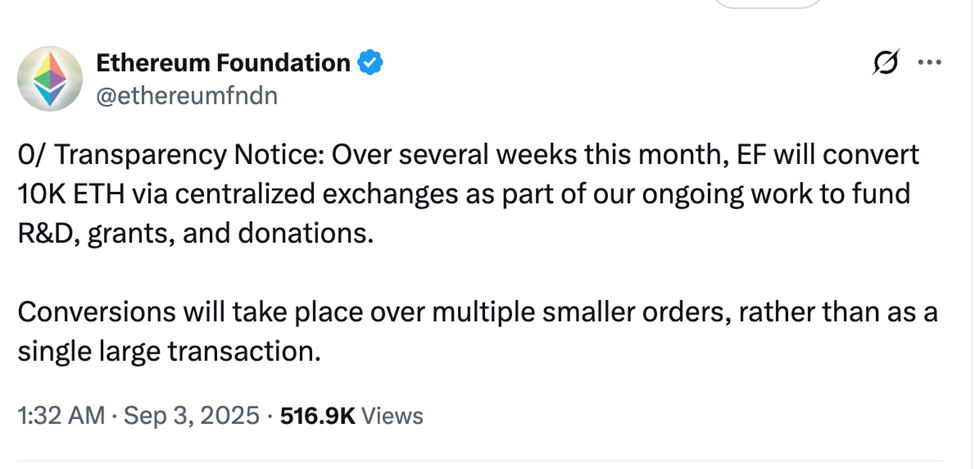
- Ethereum Foundation sent 10,000 ETH (~$42.7M) to Kraken, citing funding needs.
- The sale fits EF’s treasury plan but raised backlash over avoiding DeFi tools.
- Critics say EF’s actions show a gap between its stated ideals and real choices.
The Ethereum Foundation (EF) moved 10,000 ETH to Kraken. That was worth about $42.7 million. EF said the money will be used for research, grants, and donations.
At first, this looked normal. The Foundation holds more than $1 billion worth of ETH. Selling some to cover expenses is expected. But the way EF chose to sell by using a centralized exchange created pushback.
The crypto community said the move went against Ethereum’s own message of supporting DeFi and decentralization.
Why Ethereum Foundation Sells ETH in the First Place?
The Ethereum Foundation is not just a research group. It also manages Ethereum’s treasury. In June 2025, EF published its treasury policy. It explained how the fund should work.
The plan is simple. EF keeps enough cash to cover about two and a half years of expenses. To do this, it sometimes sells ETH, especially when the price is high. This sale fits that policy.
But the method raised questions. EF talks often about DeFi, privacy, and cutting out middlemen. Yet it still used Kraken, a centralized exchange.
Critics said EF could have borrowed stablecoins against ETH, used on-chain swaps, or sold to long-term treasury firms. Instead, EF took the old route.
Why the Community Reacted to Ethereum Foundation Selloff?
The 10,000 ETH sale by Ethereum Foundation is small compared to the daily ETH trade. It is not big enough to hurt the market. But the meaning is larger.

Traders and analysts pointed out the gap between EF’s words and actions.
Some said EF could have sold gradually on-chain instead of one exchange move. Others asked why ETH needs to be sold at all if EF truly sees it as money.
A few even argued that selling ETH to fund ETH projects shows that ETH is not yet trusted as a stable asset.
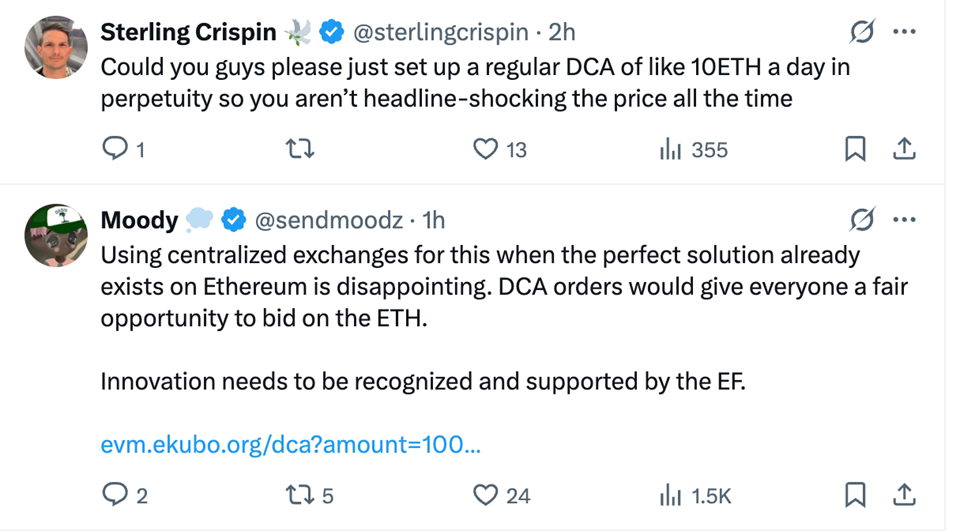
Others went further. Some argued that if EF sold ETH for dollars, it meant even EF did not fully trust ETH as money.

This is what caused the backlash. Ethereum was built to avoid old systems, but its own foundation still uses them.
The timing also mattered. ETH traded near its highest price in years. Ethereum Foundation selling at that point looked like profit-taking, which only added to the criticism.
The Bigger Picture for Ethereum
Ethereum Foundation was open about the sale. It explained why, and it said the sale would be split into smaller parts. That should reduce market shock. But the bigger issue is about trust.

The treasury blog talks about supporting DeFi and cypherpunk goals. It says EF should back open-source projects and on-chain tools. But in practice, EF still relies on centralized cash-outs.
That may not change soon.
Centralized exchanges remain faster and safer when large amounts are involved. On-chain methods still carry risks of hacks or low liquidity.
From a risk view, the decision of Ethereum Foundation made sense. But it also showed that even Ethereum’s top supporter bends its ideals when real money is at stake.

For investors, the key lesson is clear. EF has reserves of over 224,000 ETH, as reported by Lookonchain.
Every time it sells, people will question how much the EF trusts ETH itself. This 10,000 ETH sale followed policy.
But it also reminded the community that the gap between principles and practice still exists.