


The crypto market saw a sharp fall on Monday. Around $240 billion in value disappeared in one day. Bitcoin dropped from about $105,000 to almost $101,000 before finding support again.
During the fall, one chart on social media made people panic. It showed KuCoin with a very large red bar, close to –$396 million.
Many traders took this as a sign that KuCoin was “the biggest seller.” Some even asked if something was wrong with the exchange.
But the full data tells a very different story.
Crypto Market Hit by KuCoin? Not Really
The big red bar did not come from KuCoin selling coins. It came from long liquidations. A long liquidation happens when someone buys Bitcoin with borrowed money.
If the price drops, the position gets closed automatically. This automatic closing works like a forced sell. It adds selling pressure, even if the trader did not want to sell.

KuCoin had many long traders during this rally. Their positions were also placed very close to each other. So when Bitcoin fell, many of these long positions were wiped out at the same time.
This made KuCoin’s chart spike in one big event. It looked scary, but it came from the market’s inclination towards derivatives, not from KuCoin dumping coins.
Crypto Market News: Spot Data Shows KuCoin Was Not Selling
If KuCoin were really offloading Bitcoin, we would see coins flowing into the exchange. But CryptoQuant’s spot data shows the opposite.
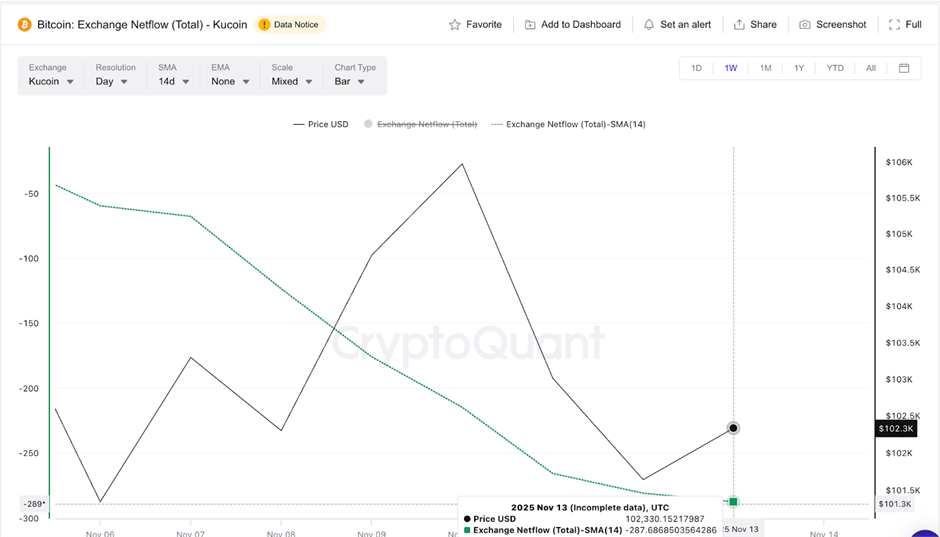
KuCoin’s exchange netflow was negative during the fall. Negative netflow means more Bitcoin was leaving the exchange than entering it.
When coins leave an exchange, people are usually holding them, not selling them. Other exchanges showed the same pattern. Across all platforms, the netflow stayed negative.
This means the market was not facing a wave of real selling from holders. It was mostly forced liquidations, not panic exits.
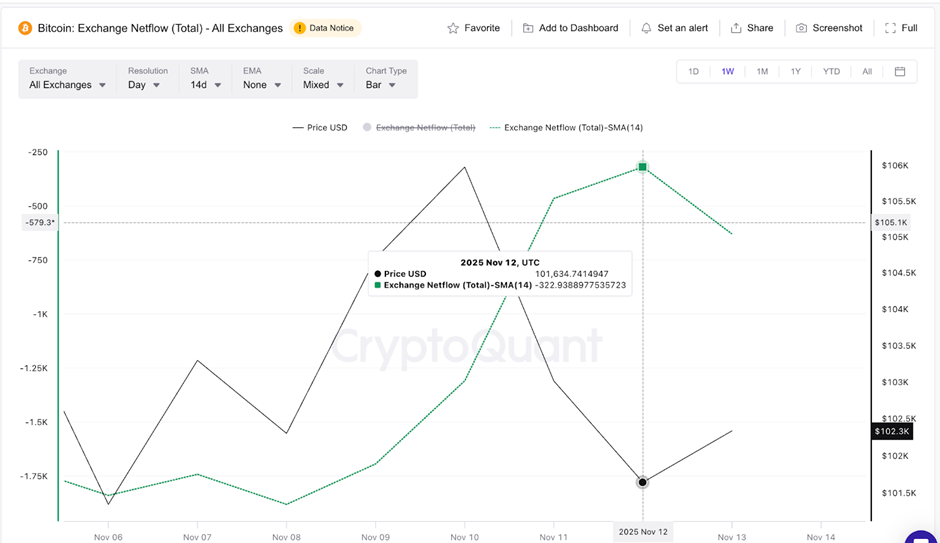
This is why Bitcoin bounced back to $102,000 soon after. If this were real selling, the price would have stayed lower for longer.
Other Exchanges Also Saw Liquidations, Just More Evenly
KuCoin was not alone. Bybit, OKX, Binance, and Coinbase also faced big, long liquidations.
The difference is simple. On these exchanges, long positions were spread across more price levels. So their charts did not show one giant bar. They showed many smaller bars.
KuCoin’s trades were mostly together. That is why one big drop triggered a chain of liquidations. And that is why the chart looked worse than the others.
Crypto Market News: Excess Leverage Was the Key Reason
The fall also happened on a day when liquidity was thin. This means there were not many buy orders waiting on the chart.
When many liquidations hit at once, and there are not enough buy orders, the price moves down faster than normal. Even a small wave of forced selling can push the price sharply lower.
This is exactly what happened here. This event was not about KuCoin selling. It was not about insolvency. And it was not about hidden news.
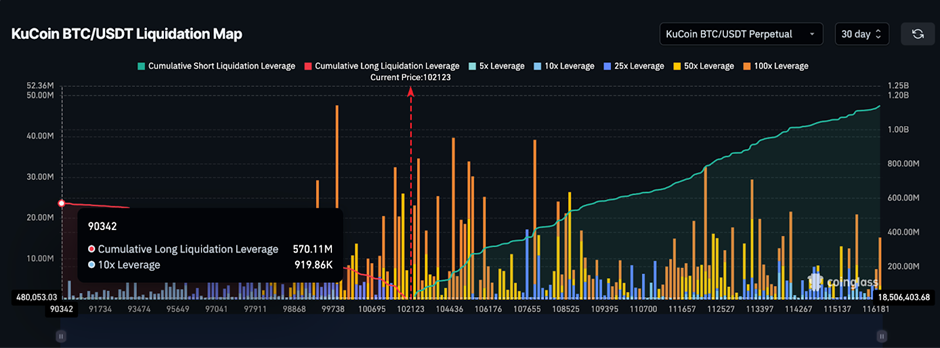
It was a simple market-led event. Too many traders used too much leverage during the rally.
When Bitcoin dropped, those positions started falling one after another. This caused a chain reaction, and the price followed. Something like a “Long Squeeze”.
Once the liquidations ended, the crypto market found its footing again, through BTC.




