





Key Insights
- In the EU crypto rules, a €10K cash cap standardizes AML rules.
- Crypto exchanges face €1,000+ transaction KYC checks.
- Privacy coins and anonymous accounts are banned on regulated platforms.
EU crypto rules 2027 are set to reshape how digital assets and cash payments are handled across the European Union. The framework comes under the new AMLR regulation and will take effect in July 2027.
The framework also places a €10,000 ceiling on commercial cash payments. For crypto users, the biggest change will come through regulated platforms.
The crypto exchanges must collect more customer information, while direct transfers between private wallets remain outside routine identity checks.
EU Crypto Rules Set New Compliance Deadline for Exchanges
EU crypto rules will require Crypto-Asset Service Providers to apply customer due diligence on occasional transactions worth €1,000 or more.
These providers include exchanges, custodians, and other firms offering regulated crypto services in Europe.
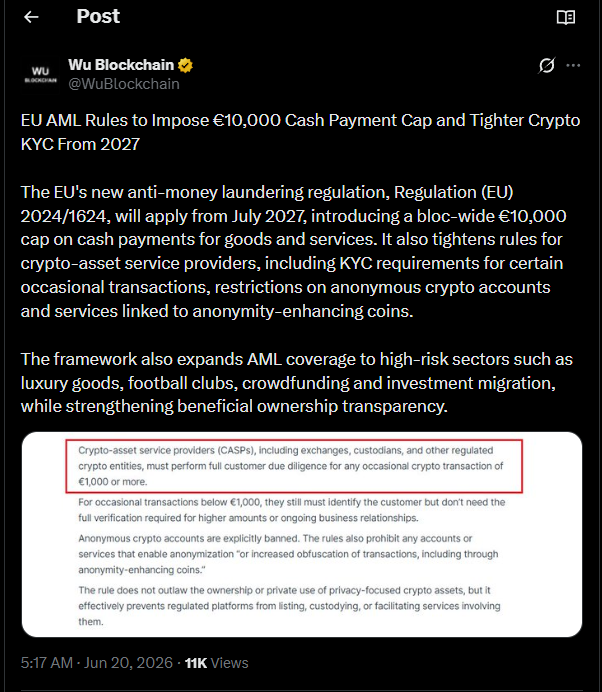
The rule also affects transactions below that level. Providers must still identify customers, although lighter checks may apply in some cases. That means crypto KYC will become a wider part of exchange activity.
The change matters because Europe wants a consistent system across member states. Different national approaches have created gaps for firms and users. As per the EU crypto rules, AMLR aims to reduce those gaps through direct rules across the bloc.
AMLR Brings €10,000 Cash Limit Across the Bloc
AMLR also introduces a common cash payment ceiling across the European Union (EU). Businesses trading goods or services will not accept or make cash payments above €10,000.
As per the EU crypto and financial rules, member states can still apply lower limits if they prefer stricter national rules. Several countries already use tighter limits, so the new standard creates a minimum bloc-wide floor.
Cash payments of €3,000 or more will also trigger identity checks for traders and other obligated entities. These rules cover commercial activity, not private transfers between individuals outside a professional setting.
The regulation does not target bank deposits or payments through regulated financial institutions. Those channels already sit inside existing monitoring and reporting systems. Regulators see large cash payments as a weak point for financial crime controls.
EU Crypto Rules Target Anonymous Accounts and Privacy Coins
EU crypto rules will also prohibit regulated firms from offering anonymous crypto accounts. The ban covers accounts that hide the customer holder or increase transaction obfuscation.
The text also mentions anonymity-enhancing coins. This means regulated providers cannot offer services that help anonymize or obscure transfers through those assets.
The EU crypto rules, however, do not prohibit the use of private cryptocurrencies that focus on privacy. It primarily restricts customers from listing, custody, and facilitation by regulated exchanges and their custodians.
Self-custody wallets remain a key distinction under the framework. Hardware and software wallet providers are exempt from the ban when they do not control user wallets.
Still, regulated firms must assess risks tied to transfers involving self-hosted addresses. They may request more information when a customer sends funds to, or receives funds from, such an address.
The rules also come as AMLA takes on a larger role in Europe. The Frankfurt-based authority will coordinate enforcement and supervise selected high-risk financial firms. Its guidance will shape how crypto KYC standards develop after the 2027 deadline.
The wider package also covers football clubs, luxury goods dealers, crowdfunding operators, and investment migration services. These sectors will face stronger checks where money-laundering risks are higher.


