


Key Insights
- Star outlines AI security checks in OKX news after a user requests fresh audits.
- A user moved some funds to OKX after Binance’s hack but still feared another breach.
- Binance says it replaced 90% of stolen assets and plans to restore withdrawals.
OKX news focused on AI security testing after Star described how the exchange checks its defenses against cyberattacks.
The exchange began automated penetration testing using large language models more than a year ago, he said.
His statement followed concerns raised by a user who moved funds from Binance after its reported multibillion-dollar hack. The user asked OKX to review its safeguards as Binance worked to replace stolen assets.
OKX News Reveals Security Checks Started Over a Year Ago
Star said OKX detects and responds to cyberattacks every month, including advanced persistent threats targeting the crypto industry.
He linked its continued operations to security systems and practical experience developed over 13 years. He said the AI testing program has expanded the depth, coverage, and efficiency of security checks.
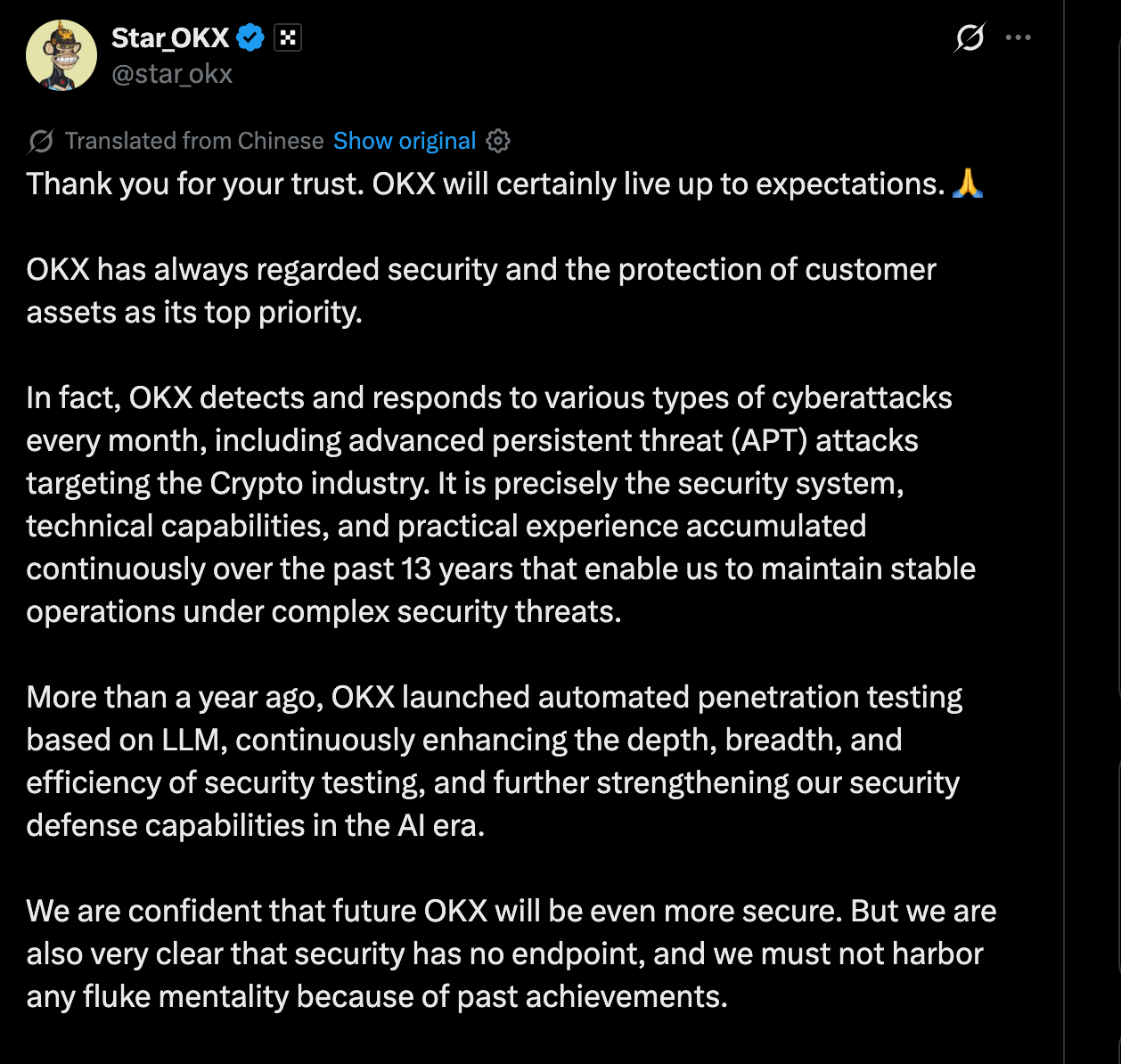
Star also said the exchange would examine lessons from recent security incidents involving competitors. He pledged stronger internal reviews and continued upgrades to its security systems. However, he warned against complacency and said protecting customer assets remained a priority.
A User Moved Funds Before Raising Security Concerns
The OKX news followed an X post from Ron describing his concerns about keeping assets on exchanges. Ron said approximately 80% of his assets had been on Binance when the attack occurred.
Just eight hours earlier, he had consolidated funds from other exchanges into Binance. He described the Binance theft as demoralizing after placing most of his assets on the platform.
After the theft, Ron said he transferred a portion of his holdings to OKX. That decision brought another worry, hackers might target the exchange where he had moved his funds. He acknowledged that avoiding a previous breach offered no assurance against a future attack.
Ron asked OKX representatives to review hot wallets, permissions, supply chains, and internal processes again.
His request focused on crypto exchange security, as the move failed to alleviate his concerns. He also described spreading holdings across platforms and keeping some assets in personal custody as his preferred approach.
Binance Reports Replacing 90% and Plans to Resume User Withdrawals
The OKX news comes on the heels of the recent Binance hack incident. TRM Labs reported approximately $6.36 billion in transfers from Binance wallets to attacker-controlled addresses across ten blockchains.
Its estimate valued each transfer at the time the assets left the exchange on October 29. Ethereum accounted for approximately $3.79 billion, while Bitcoin outflows totaled 18,270 BTC, worth about $1.47 billion.
Tron outflows totaled approximately $628 million. The XRP Ledger lost about $296 million. Solana recorded approximately $96 million in outflows, with another $28 million leaving Avalanche wallets.
TRM attributed the attack to TraderTraitor, a North Korean hacking unit, citing intelligence gathered on- and off-chain. The firm identified similarities with earlier thefts, including advance preparations and signatures obtained before execution.
However, following the incident, Binance said it was investigating a potential security issue and suspended withdrawals across several networks. The exchange said user funds were safe while it examined the incident. On Saturday, Binance said it had repaid 90% of the approximately $6.3 billion stolen.
The company said it had allocated more than $6.34 billion from company funds to cover losses. It reported full coverage for Bitcoin, Ethereum, Tether, and seven other widely traded assets. Binance said that sourcing the remaining 10% could take longer and set November 1 as the target for reopening withdrawals.
This is a developing story. Recovery figures and withdrawal availability may change as exchanges publish further updates.