

Key Insights:
- Recovery fees dominate Tether news as crypto hack victims face charges of up to 20%.
- Bittok has yet to recover its frozen USDT following a $50 million breach in 2020.
- Tether has frozen over $7 billion in stolen tokens and reissued $1.2 billion in USDT.
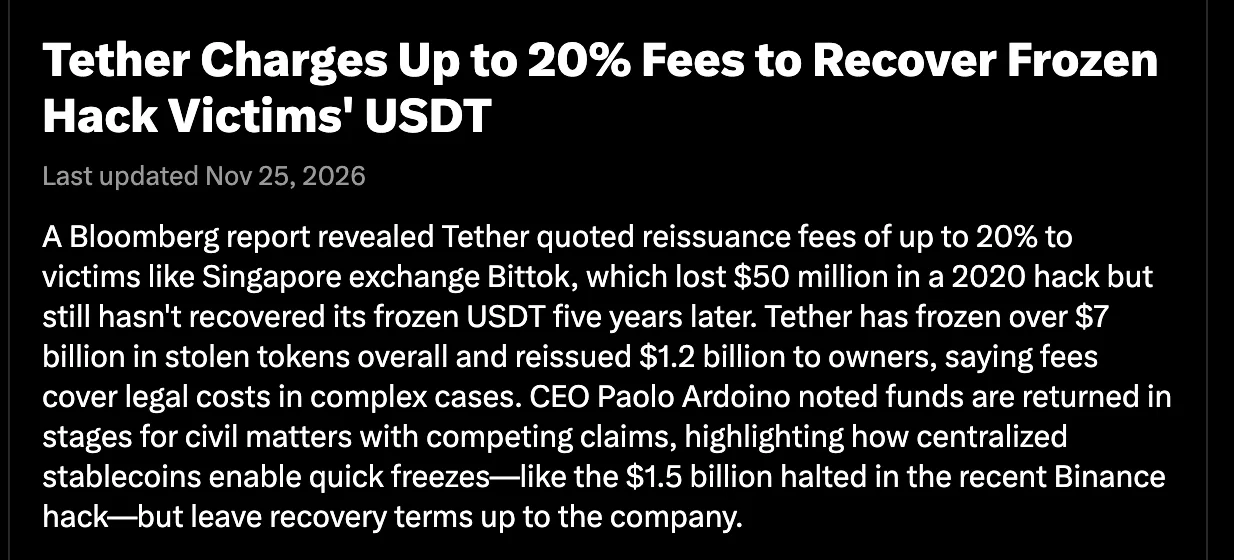
Tether has quoted fees of up to 20% to some crypto hack victims seeking the return of frozen USDT, adding new updates to the Tether news. The update follows a Bloomberg investigation into the recovery of stolen digital assets.
The report examined the case of a Singapore-based crypto exchange that lost $50 million in 2020. More than five years later, the exchange has yet to recover its frozen USDT.
The exchange, Bittok, is among the victims whose recovery efforts Bloomberg examined. Tether can prevent stolen USDT from moving between wallets and later issue replacement tokens to their rightful owners. However, freezing the cryptocurrency and returning it to victims are separate parts of the recovery process.
Tether News Reveals Recovery Fees Above the Disclosed Guidelines
According to a Bloomberg report, Tether quoted recovery fees of up to 20% in correspondence regarding stolen tokens. The investigation on the Tether news did not reveal that Bittok had paid the quoted fees, nor did it report that the company had introduced a general 20% charge for all recovery requests.
Tether’s published guidelines impose a fee of up to 10% or $1,000 for qualifying requests. The reported 20% rate exceeds the percentage listed in those guidelines. However, the reported fees do not amount to an officially announced revision to the company’s recovery policy.
A company spokesperson told Bloomberg that recovery fees help cover expenses associated with returning frozen funds, including legal costs.
The spokesperson also disclosed that Tether had reissued $1.2 billion in USDT to date. Meanwhile, the stablecoin issuer has frozen more than $7 billion in tokens associated with theft.
Why Crypto Hack Victims Could Wait Years to Recover Frozen USDT
Tether CEO Paolo Ardoino discussed the complications surrounding Tether news in which multiple parties claim ownership of frozen assets.
He explained that the company returns funds in stages when civil disputes involve competing claims. This approach, he said, seeks to limit the company’s exposure to legal risks. Ardoino also cited the lack of clear legal guidance governing such recoveries.
For Bittok, the recovery process remains unresolved despite Tether’s ability to reissue frozen tokens. Although the crypto hack occurred in 2020, the exchange still has not recovered its frozen USDT. The $50 million figure represents the exchange’s losses from the breach, not the amount of USDT awaiting reissuance.
Binance Hack Brings Tether’s Recovery Process Into Focus
The recovery fees have received attention following the October attack on Binance. Bloomberg examined how Tether and fellow stablecoin issuer Circle froze accounts linked to the movement of stolen cryptocurrency. The investigation also examined the control both companies retain over tokens issued on their respective networks.
Tether previously disclosed that it had frozen more than $1.5 billion in USDT linked to the Binance crypto hack. Binance said third parties had frozen or intercepted nearly $2.85 billion in stolen assets. To add to Tether news, on November 18, Reuters reported that the exchange was working directly with Tether to arrange the return of frozen cryptocurrency.
The recovery discussions concern assets that third parties prevented from circulating following the October security breach.