



Key insights
- Short liquidations aided Monday’s rebound, but data does not confirm lasting spot demand.
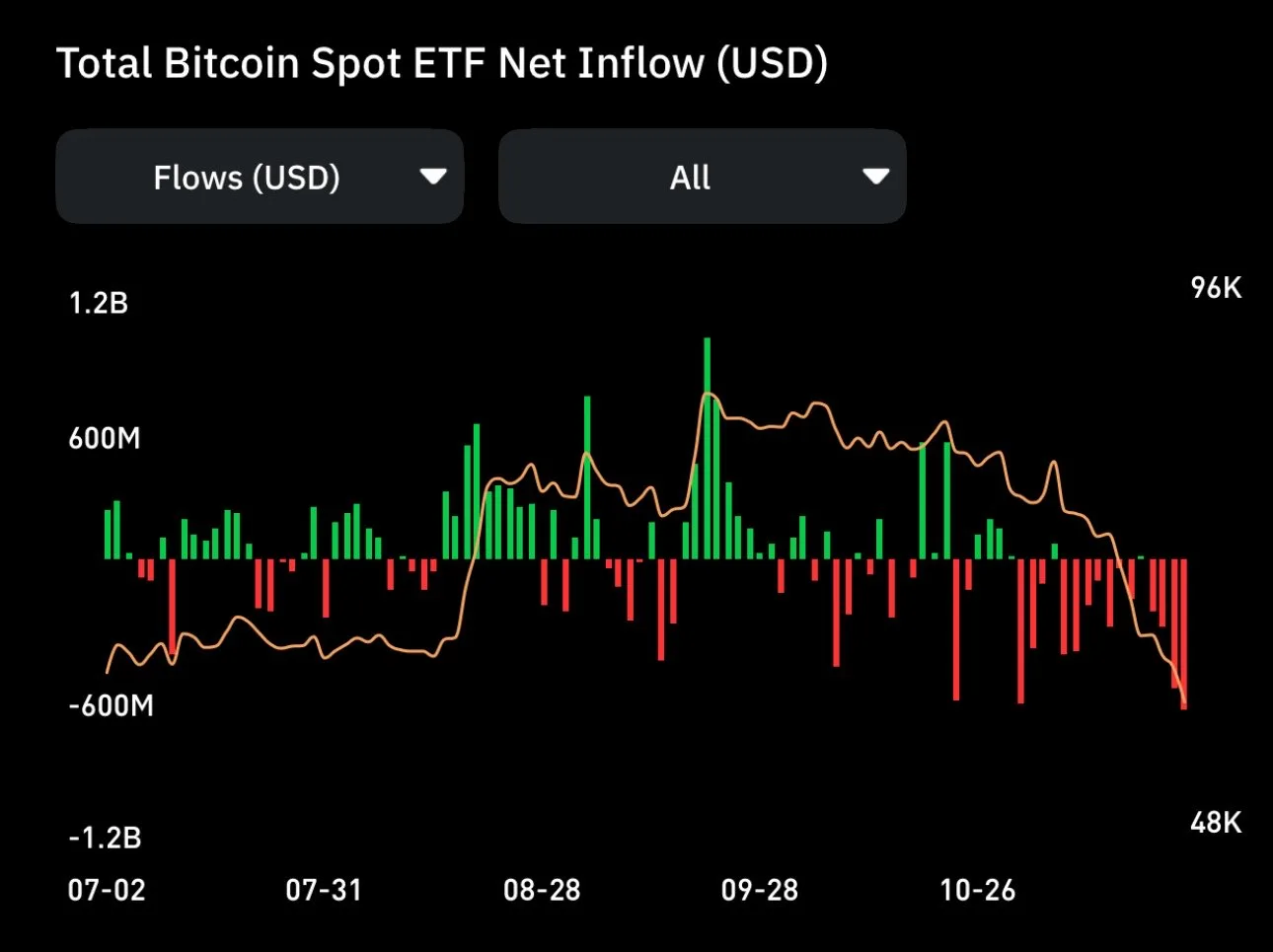
- U.S. spot Bitcoin ETFs posted $1.79 billion in weekly withdrawals, led by BlackRock.
- Bitcoin stays below key averages as support, resistance, and macro releases take focus.
The Bitcoin price recovered above $61,000 Monday after reaching $55,130 over the weekend, its lowest level since September 2024. The BTC price stood near $61,500, up nearly 4% daily but down 5% over seven days. The bounce followed heavy liquidations and short covering.
Yet spot Bitcoin ETFs recorded $1.79 billion in net outflows last week, and spot volume was declining. Forced position closures can lift prices briefly, while fund flows and volume offer no clear confirmation of fresh demand. That leaves the Bitcoin price rebound dependent on evidence beyond a rapid short squeeze.
Bitcoin Price Rebounds as Short Liquidations Drive the Move
The weekend move had two distinct phases. Roughly $2.67 billion in crypto positions were liquidated over 24 hours, mostly long positions caught in the decline. That forced selling added pressure as Bitcoin fell below $60,000 and touched its weekend low. Market analyst CryptoJack had also flagged a growing liquidation pool below $60,000 as long positions accumulated.
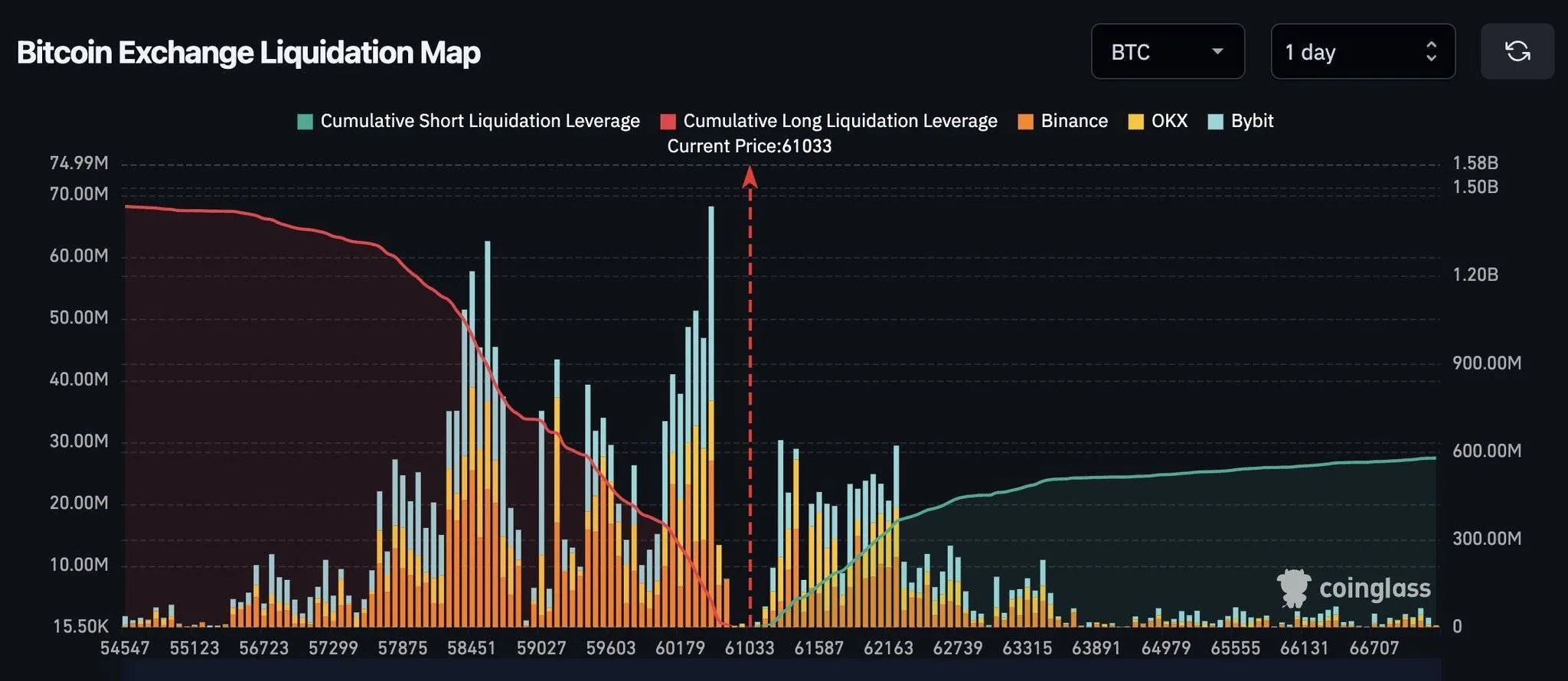
The direction shifted as BTC bounced. CoinGlass recorded $68.82 million in Bitcoin short liquidations during one hour, compared with $1.64 million in long liquidations. Closing a short requires its holder to repurchase BTC, adding immediate demand. Such forced closures do not show that new spot buyers have entered.
Total cryptocurrency capitalization rose 2.88% over 24 hours, while Bitcoin volume fell 37%. The split leaves the rally without a clear increase in market participation. The initial price recovery may reflect the unwinding of bearish positions more than a broad pickup in demand. That remains the central test for Bitcoin price recovery.
Bitcoin ETFs Post $1.79 Billion in Weekly Outflows
SoSoValue data shows U.S. spot Bitcoin ETFs recorded $1.79 billion in outflows from Nov. 16 to 20. That was the largest weekly withdrawal since the week ended June 26. It extended the streak to four straight weeks. BlackRock’s iShares Bitcoin Trust accounted for about $1.37 billion of those outflows.
ETF flows measure fund creations and redemptions, so they provide a separate demand signal. Weekly data do not capture every spot purchase or sale across the crypto market.
Separate on-chain data point to pressure among recent holders. CryptoQuant analyst Amr Taha reported short-term holders sent 92,100 BTC to exchanges at a loss on November 21. That transfer does not prove a sale. It shows holders sent coins to venues where sales could occur.
CryptoQuant data shows a $2.54 billion decline in Bitcoin open interest across Binance, Gate, and Bybit over 30 days. Lower open interest points to fewer outstanding leveraged positions.
Bitcoin Price Faces Resistance as U.S. Data Approaches
The Bitcoin price remained well below its daily moving averages. The 50-day EMA sat near $72,978, the 100-day around $74,515, and the 200-day near $74,987. That band leaves a broad overhead barrier. The daily RSI stood near 25, an oversold reading, while the MACD remained negative. Oversold conditions can allow a bounce but do not set a floor.

Short-term resistance lies near $62,345, with support around $58,625. A break above resistance would improve the near-term setup, though the moving-average band remains the stronger test. A close below support could expose Saturday’s $55,130 low. For the Bitcoin price, a sustained close above nearby resistance would offer clearer confirmation.
The Kobeissi Letter outlined several events for the holiday week. Its schedule lists November manufacturing and services PMIs Monday and consumer confidence Tuesday. October PCE and the Q3 GDP estimate were scheduled for Wednesday at 8:30 a.m. ET. October new-home sales were also due that day. U.S. stock markets close Thursday for Thanksgiving, while Bitcoin remains active around the clock.
This article provides general financial information, not investment advice. Cryptocurrency prices are volatile, and derivatives trading carries substantial liquidation risks. Investors should conduct independent research before making financial decisions.